


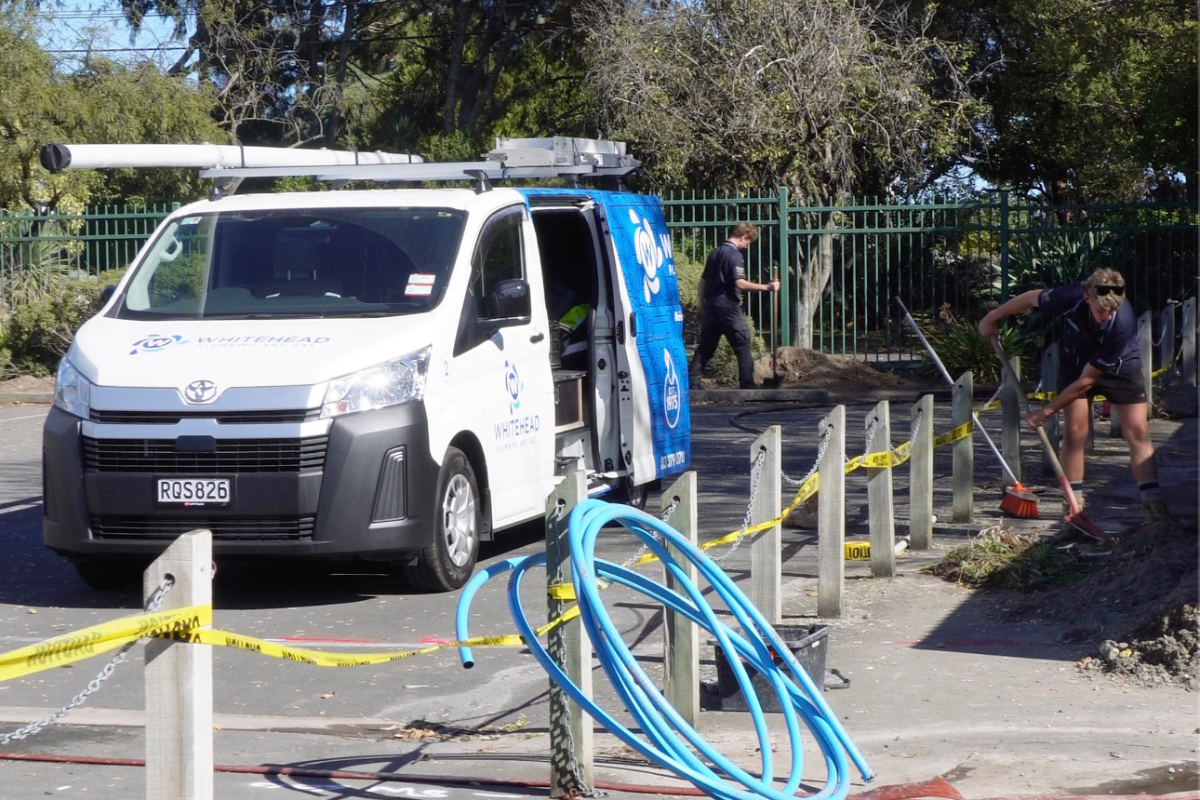
Most homeowners think about a plumber’s qualifications before they think about their insurance. It makes sense. You want the leak fixed, the toilet reinstalled, the gas appliance connected safely, and a licence card feels like the obvious thing to check. But licensing only tells you the person is allowed to do the work. It does not tell you what happens if something goes wrong while they are doing it, and in a trade that involves water, gas and someone else’s home, that is worth thinking through before anyone starts work, not after.
Why this matters more than most homeowners realise
Plumbing work happens inside your walls, under your floors and around fittings that are expensive to replace. Most jobs go exactly to plan. Occasionally they do not. A fitting lets go after a repair, a soldered joint fails a few weeks later, a vehicle backs into a fence on the way out. These are not signs of a bad tradesperson, they are the ordinary risks of a trade that works with pressurised water and gas inside occupied homes.
The real question is what happens next. If the plumbing business carries proper insurance, a genuine accident is covered and resolved without drama. If it does not, the homeowner can be left arguing over who pays for the damage, sometimes long after the invoice has been settled. Checking this before the job starts costs you nothing and can save you a genuinely difficult conversation later.
Licensing and insurance are not the same thing
It is worth being precise here, because the two get confused. In New Zealand, most plumbing, gasfitting and drainlaying work is legally restricted. Anyone doing it must be registered with the Plumbers, Gasfitters and Drainlayers Board and hold a current annual practising licence, which they are required to carry and produce on request. That licence is about competency and legal authorisation. It confirms the person is qualified and up to date with their training.
Business insurance is a separate matter entirely. It is not a condition of the PGDB licence, and it is not government mandated. What it does is protect you, the client, and the business itself if something goes wrong during the work. A tradesperson can be fully licensed and still be under-insured, which is exactly why it is worth asking both questions rather than assuming one covers the other.
The insurance a professional plumbing business should carry
There is no single legally defined list, but a genuinely professional plumbing business in New Zealand will typically hold the following, and most industry insurance programmes, including the one available to Master Plumbers members through their insurance partner, are built around this same set of covers.
Public liability insurance
This is the core cover. It protects against claims for accidental property damage or injury caused by the business’s work. If a repair goes wrong and water damages a client’s flooring or ceiling, public liability cover is what pays for the resulting claim rather than leaving the homeowner to argue it out directly with the tradesperson.
Professional and statutory liability cover
This covers the advice and workmanship side of the job, defending against claims that the work itself was defective, and covering legal costs if a dispute ends up in front of a regulator or the Plumbers, Gasfitters and Drainlayers Board. It is a different exposure to public liability, because it is about the quality and compliance of the work rather than accidental physical damage.
Commercial vehicle insurance
A plumber’s van is a mobile workshop, stocked with tools, parts and equipment, and it is on the road constantly between jobs. Commercial motor cover protects the vehicle and what is inside it, and it matters to you as a client because a business that has not properly insured its own vehicles is a business that has not thought carefully about risk more broadly.
Tools and material damage cover
This protects the business’s tools, stock and equipment against loss or damage. It does not directly protect a homeowner’s property, but it is a reasonable proxy for whether a business runs itself properly. An operation that cannot afford to insure its own tools is unlikely to have thought hard about liability cover either.
Is plumber insurance a legal requirement in New Zealand?
No, and it is worth being upfront about that rather than overstating it. Business insurance is not a legal condition of holding a PGDB practising licence, and there is no law requiring a plumber to carry public liability or any other specific cover. What is true, and this is the point that actually matters to a homeowner, is that using an unlicensed or uninsured tradesperson can put your own house insurance at risk. Both the PGDB and the Insurance Council of New Zealand have publicly warned that work carried out by an unauthorised person can void a homeowner’s own policy, which is a real financial exposure even if the plumbing business itself carries no cover at all.
So the honest answer is this. Insurance is not compulsory, but it is what separates a properly run trade business from one that is hoping nothing goes wrong. A business that has invested in the right cover has, in practice, invested in doing the job properly.
Why Master Plumbers membership is a useful signal
Master Plumbers is a separate industry accreditation on top of the legal PGDB licence. Members must meet an ongoing quality assurance standard and follow a code of conduct, and homeowners get the backing of the Master Plumbers Guarantee, which protects against substandard workmanship and the loss of an advance payment if a contractor becomes insolvent mid-job.
We are Master Plumbers members, and it is one of the reasons we carry a proper insurance programme rather than the bare minimum. It is a straightforward thing to check for any tradesperson you are considering, using the Master Plumbers “Find a Master Plumber” search tool.
What to ask before you hire a plumber
A short, direct set of questions tells you most of what you need to know.
- Ask to see their current PGDB licence card and check the expiry date
- Ask whether the business carries public liability insurance and, if the job is significant, ask for a certificate of currency
- Ask whether they are a Master Plumbers member
If anything about the answers feels vague or evasive, treat that as useful information in itself.
You can also check any tradesperson’s registration and licence status for free on the Plumbers, Gasfitters and Drainlayers Board’s public register, searching by their name rather than the business name.
What happens if something goes wrong on the job
If a genuine accident happens during a job carried out by a properly insured business, the process is usually straightforward. The damage is reported, the insurer is notified, and the claim is handled without the homeowner needing to fund the repair themselves or chase the tradesperson personally for it. That is the entire point of the cover, and it is why asking about it upfront, before there is any problem to solve, is worth the slightly awkward thirty seconds it takes.
Frequently asked questions
Is it a legal requirement for a plumber to have insurance in New Zealand? No. Business insurance is not a condition of the PGDB practising licence and is not government mandated. It is standard practice for a professional business, but it is not compulsory by law.
What insurance should a licensed plumber carry? At minimum, public liability insurance to cover accidental damage or injury, and most professional operators also carry professional or statutory liability cover, commercial vehicle insurance and cover for their own tools and equipment.
Can hiring an unlicensed plumber affect my own house insurance? Yes. The Plumbers, Gasfitters and Drainlayers Board and the Insurance Council of New Zealand have both warned that using an unauthorised tradesperson for restricted work can void a homeowner’s own insurance policy, regardless of whether the tradesperson themselves is insured.
How do I check if a plumber is licensed? Search their name, not the business name, on the Plumbers, Gasfitters and Drainlayers Board’s free public register.
Does being a Master Plumbers member mean a business is insured? Membership requires meeting an ongoing quality assurance standard and gives homeowners the backing of the Master Plumbers Guarantee. It is a strong trust signal, but it is worth still asking the business directly about their own insurance rather than assuming.
If you would like to talk to a Master Plumbers member with a proper insurance programme behind them, get in touch with our Christchurch team. We are happy to answer any question about our licensing, our rates, our cover or how we work before you commit to anything.